

Final Placements - TISS Mumbai - Class Of 2019
Highlights as per the TISS placement report 2019 -
Aspirants Relations and Branding Committee
Highlights as per the TISS placement report 2019 -

"This journey, so filled with surprises, it makes me feel alive

This article meant to be understood with the less matter. If you want to know the clear picture of this, you need to refer many. I want to explain as easy as a cake walk and Just cursory reading is required. Any country's economy is the elephant in the big room as it is the modus operandi for everything. Currency depreciating and accelerating is the daily activity as our individual chores. Especially, "High" populated countries like India need to be very conscious about the Currency swings as many people depend on it. You can moot a lot of reasons as we know Economics falls short behind quantum physics. I will segment into different 4 factors so that you can understand easily and make it as clear to yourself Most affected 4 factors (Note: You will find itinerary reasons) Trade balance: It is about the exports and imports. Basically depends on trade deficit (with all countries on an average), which means simply how much India have liability or how much our RBI government have less when you compare to sufficient ( i.e we are not able to produce all our needs in our country). A trade deficit is when a country imports exceed its exports. It is also called a negative balance of trade. A trade deficit occurs when a country does not produce all it needs. Most nations must borrow from foreign states to pay for the imports. Therefore, a country with a trade deficit will also have a current account deficit ( Which is now increasing by nearly 1.9% daily). For clear picture Why Most Countries Hate Trade Deficits and The Pros & Cons of a Trade Deficit“ Indirectly we are buying more from outside, we are giving more money to outside sources which portend to less rupee in our pockets. But we need to share the same value for all, so as an average it will reduce simply”Price of commodities: Supposedly, crude oil price rose up to 75 dollar which was 50 dollars in the past. We are giving 15 dollars extra for the same amount of commodity (we need one soap per 15 days or 30days (depends on the person) despite the price of soap, we should need it as the clock runs) How key commodities swing with currency movements “ Same here outflow of more rupees is here” Foreign direct investment: More FDI, more dollars are coming to our country and Less FDI, more withdrawing, In a second case, we face rupee depreciation. Crucial reason is uncertain of trade. As people dismayed of Trump policies like taxes, interest rates…etc, investors not having interest to put investment so that they withdraw investment money which cues to loss of rupees from our country. “ As dollars are increasing, rupee depreciates such as 70,75,80….” …Here for one dollar, you should give 80 rupees for outsiders (I.e, that is the cause of inflation in our country too FDI vs RupeePolicies of Federal Reserve bank: This is like RBI in America. Most of the people take money from that bank and invest in our country. When it increases its interest rates, they should give more money. Due to this, they withdraw their money.EXPLAINED: How likely hike in Fed rates can impact India. Money control To stop depreciation, Just decrease outflow of rupee Merely, read this story Family Rupees: Suppose your family has a currency called “Merupee ”, It costs 25 rupees per member i.e, 100 rupees (4 members family) your family having which is sufficient to your family needs. Value of Merupee = 25 rs Suppose you export watch from other families which costs 1 rupee each, 4 rupees in total Thus, Deficit 100–4 = 96 rupees, your family have 96 only But you have the same amount of needs this time too, Now Merupee value is decreased 96/4 = 24 rupees So, the value of “Merupee” = 24 rs, 1 rupee decrease To stop depreciation, you can do such as Make watches (Make your needs) Give watches to some other families as inflow increases (they give money). Think your self and match with India scenario, search it ..You will think whole Economics is in your hand after you analyzed this well Got it..? Thank you.


Change is we all resist being a human being! Everyone fears change and that's the main challenge in front of HR Management of any organization.
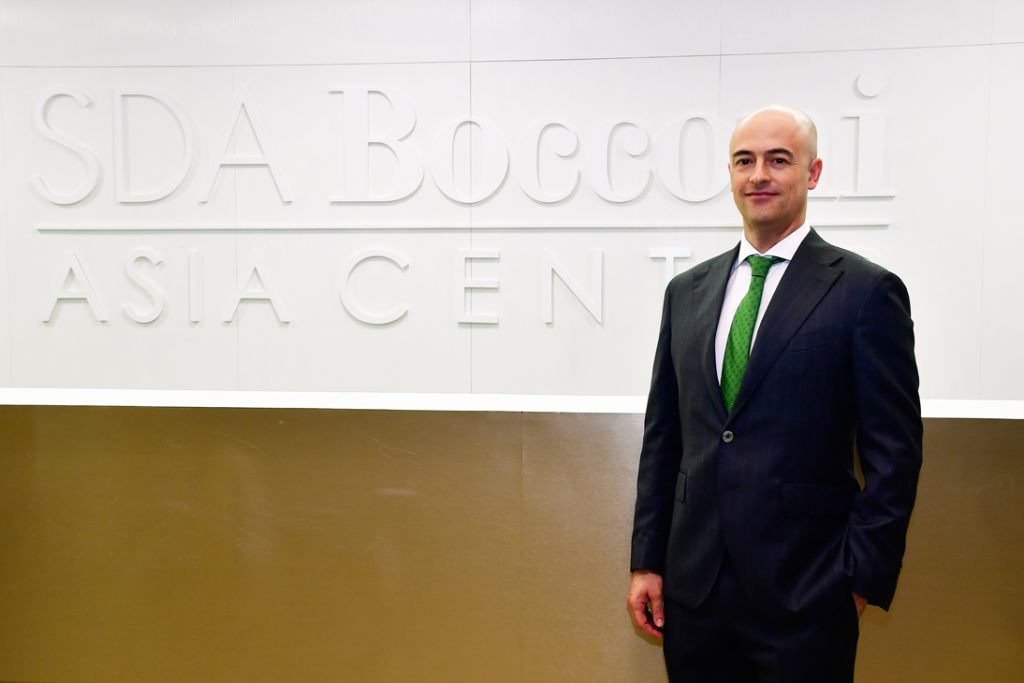
Case studies are an MBA staple. In all of my years as a strategy professor at SDA Bocconi and now the dean at SDA Bocconi Asia Center, I have always stressed how important it is to learn how to solve case studies. As a b-school student, you will be discussing case studies almost every day. Simply because you learn a lot from real life examples where you can put yourself in. A case study allows you to understand businesses and their challenges at a more practical and realistic level, as well as to apply theoretical frameworks is a useful manner. You'll learn how businesses can plan everything strategically, from their smallest investment to their biggest move, and you'll also understand the psyche with which these decisions are made. Whether you’re preparing for your b-school interview or an interview for your dream job, it is critical for you to know how to break down a very complex business problem and how to argue for and communicate the potential solutions. When you go to an interview and are asked to solve a problem, you’re mostly evaluated on your ability to demonstrate that you can identify and map the core elements of that situation parts that need to be investigated, that you are able to ask the right questions on each one of those elements and that you can then generate and analyse a number of alternative solutions and pick one of them. So, how do we break down a complex business problem? To help you understand how to solve a strategy case study let’s take the example of an airline company that is facing a particular investment decision. Assume that this airline company is already present in a certain country with a wide network of flights connecting numerous cities. Its prices are very competitive and its customers are particularly satisfied with its punctuality and general service. Now imagine that this airline has now a chance to buy some new slots in an airport where they are not present at the moment. It seems like a great decision to grow the business, but is it? How do we break down that case if we were in charge of making that decision? There are two fundamental pieces of analysis to perform here. First, you need to assess the investment opportunity itself, separate from whatever else the company is doing. For this, you need to calculate the return on investment of these new slots. You should look at the market and how many new customers you can get with those new flights, and you also should look at the cost of buying and running those slots. Now you would be able to calculate the return on investment measure that you can learn in any basic finance course. Let’s assume that the return on investment is good in this case. For the second part of the analysis, you need to assess the impact of that investment in whatever else the company is doing, that is, on the overall strategy of the company. This is a less straightforward and more difficult part. For that, you need to understand the business model of the company, that is, what are the two or three drivers that are absolutely core to that business model? If you look at the airline business you realize that one of its key drivers is the turnaround time. Turnaround time is the time that goes from the moment a plane lands in an airport, unloads the people and the baggage, loads the next group of people and their luggage in the flight, and then takes off again. It is important because during that time the company is not making money. So if it is very long, the company is losing money. Now, imagine that the company has the best turnaround time in the industry, about half of the industry average. Now you calculate the impact of that difference of less turnaround time on the company’s profit and loss account and you realize that two-thirds of the profit of that company makes comes from of the more efficient turnaround. So at this point what are the smart questions to ask about this case? First, if you buy those slots, what is the impact on the turnaround time of the rest of the airline’s network? Is that an airport that causes a lot of delays or not? Are there regular flight cancellations and constant delays? If so, you have a problem because if you start operating from that airport, your plane is going to take off late, it is going to arrive in another city late, which is going to increase the turnaround time in that city and so on and so forth; and all of a sudden you are running a business with a much higher turnaround time and you've lost a huge chunk of your profit as a consequence. So that would be one fundamental way to break down the case. First, separate the financial stand-alone assessment from the strategic impact assessment. Second, when you get into the strategic part you need to identify the two or three key drivers of the business model of the company because those are the ones that you have to protect, at all costs. If the new investment impacts those drivers negatively, you might not make it even if the stand-alone return is very positive. So why is it so important to learn to break down cases? Well, because management is all about solving complex problems and finding the best solution among a set of alternatives. When you go into an interview, the person in front of you wants to know if you’re capable of understanding the scope of a problem and asking the right questions through a structured approach. It is a discipline that we intensively teach in all our courses and programs at SDA Bocconi Asia Center because we realize how critical it is for students and managers, whether they are facing a job interview or an actual real-life situation at work. Prof David is the Dean of SDA Bocconi Asia Center. He teaches the course “Strategic and Entrepreneurial Management” at the Asia Center and is an Assistant Professor in the Department of Management and Technology at Bocconi University, Milan, Italy. He has completed his degree in Industrial Engineering from Universitat Politècnica de Catalunya and also earned his Master in Business Administration from IESE Business School in Barcelona. He also went on to complete his Ph.D. in Management from the University of California Los Angeles (UCLA).

As a part of the team organizing the annual alumni meet of NITIE this year, I was waiting at the campus gate to welcome an alumnus, who was a student of PGDIM batch of 2010 and holds a prestigious position at a well-known bank in India. I had already created a picture in my mind of a charismatic personality well-groomed in his expensive suit arriving in no less than an Audi or a BMW. Interestingly, I almost didn’t spot him while I was standing at the campus gate to receive him. Only when I turned back to see a man in a casual off-white shirt with denim jeans and Bose headphones around his neck and getting out of an auto-rickshaw, that I realized it was indeed him. I introduced myself to him with a smile and he responded with a wider smile and warmth as if he was welcoming me to his alma mater. Well, in this case, it's true because he had been frequently visiting the campus for guest lectures and knowledge sessions ever since he passed out, while I was associated with the college for little over 6 months.
Are leaders born or are they made? Can a two-year MBA program instil all that it takes to prepare leaders of tomorrow? This question has been debated religiously over the years in the B-School circuit and is relevant even today.