
The What, Why And How Of Monetary Policy Committee
Our student team member Nikhita Basti reached out to Ravi Kumar Gupta to find out more about the Monetary Policy Committee. Here are his thoughts -
Nikhita Basti
Our student team member Nikhita Basti reached out to Ravi Kumar Gupta to find out more about the Monetary Policy Committee. Here are his thoughts -
On 1st October, State Bank of India (SBI) chief Arundhati Bhattacharya’s tenure was extended by one more year, the announcement coming five days ahead of the end of her three-year term.
A quarter percentage point cut in the Reserve Bank of India (RBI)’s policy rate was not unexpected (although the market was vertically divided, a few, including me, were expecting a rate cut) but it’s not obvious why the central bank has decided to bring down its policy rate to 6.25%, a six-year low. It’s also very likely that this will be the last rate cut for this fiscal year.
On Tuesday, a group of five men and one woman will decide whether the Reserve Bank of India (RBI) should cut its policy rate—a decision which had all along been the prerogative of one person: the RBI governor. Indeed, there’s been a technical advisory committee (TAC) since June 2009 to give inputs for policy-making but, unlike the six-member monetary policy committee (MPC), it did not have statutory status and hence the governor was under no obligation to accept its suggestions. On most occasions in the past seven years, the RBI has not done what most members of TAC have wanted it to do.

On 15th September, the Central Bureau of Investigation (CBI) registered a case of corruption against Archana Bhargava, a former chairperson and managing director (CMD) of United Bank of India (UBI), after the agency carried out raids at multiple cities and recovered cash, jewellery and investment of over Rs 13.5 crore. Allegedly, Bhargava had abused her official position, first as an executive director (ED) of Canara Bank and later as the boss of UBI for making money for herself and/or for a company in New Delhi, owned by her husband and son.
Why would any economy want to have a negative interest rate???
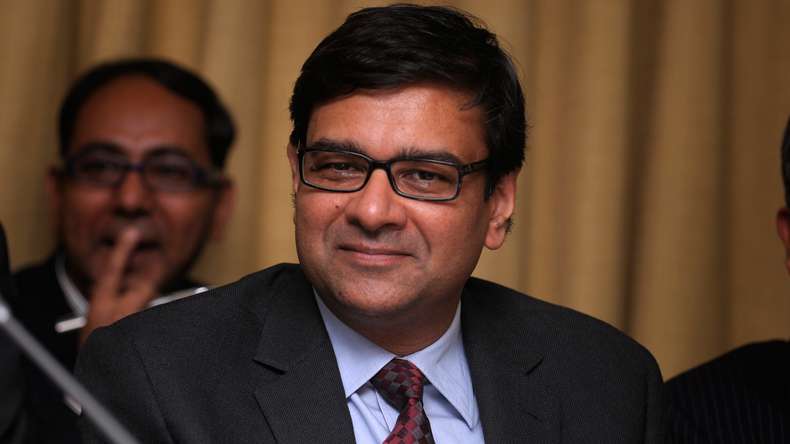
In August 2013, at the 10th Nani A. Palkhivala Memorial Lecture on ‘Five Years of Leading the Reserve Bank—Looking Ahead by Looking Back’, a few days before he stepped down as the Reserve Bank of India (RBI) governor, Raghuram Rajan’s predecessor D. Subbarao dwelt on the issue of autonomy and accountability of the Indian central bank.
Our student team member Nikhita Basti reached out to Ravi Kumar Gupta to find out more about the Monetary Policy Committee. Here are his thoughts -
On 1st October, State Bank of India (SBI) chief Arundhati Bhattacharya’s tenure was extended by one more year, the announcement coming five days ahead of the end of her three-year term.
A quarter percentage point cut in the Reserve Bank of India (RBI)’s policy rate was not unexpected (although the market was vertically divided, a few, including me, were expecting a rate cut) but it’s not obvious why the central bank has decided to bring down its policy rate to 6.25%, a six-year low. It’s also very likely that this will be the last rate cut for this fiscal year.
On Tuesday, a group of five men and one woman will decide whether the Reserve Bank of India (RBI) should cut its policy rate—a decision which had all along been the prerogative of one person: the RBI governor. Indeed, there’s been a technical advisory committee (TAC) since June 2009 to give inputs for policy-making but, unlike the six-member monetary policy committee (MPC), it did not have statutory status and hence the governor was under no obligation to accept its suggestions. On most occasions in the past seven years, the RBI has not done what most members of TAC have wanted it to do.
On 15th September, the Central Bureau of Investigation (CBI) registered a case of corruption against Archana Bhargava, a former chairperson and managing director (CMD) of United Bank of India (UBI), after the agency carried out raids at multiple cities and recovered cash, jewellery and investment of over Rs 13.5 crore. Allegedly, Bhargava had abused her official position, first as an executive director (ED) of Canara Bank and later as the boss of UBI for making money for herself and/or for a company in New Delhi, owned by her husband and son.
Why would any economy want to have a negative interest rate???
In August 2013, at the 10th Nani A. Palkhivala Memorial Lecture on ‘Five Years of Leading the Reserve Bank—Looking Ahead by Looking Back’, a few days before he stepped down as the Reserve Bank of India (RBI) governor, Raghuram Rajan’s predecessor D. Subbarao dwelt on the issue of autonomy and accountability of the Indian central bank.