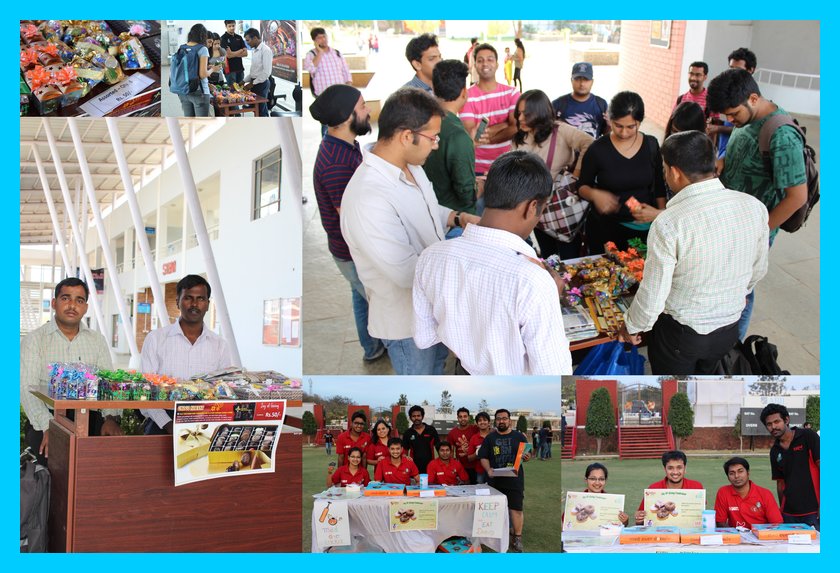
The Joy of Giving is one of the important social events of the Social, Entrepreneurship and Consulting Cell of SIBM Pune. Joy of Giving instills in people the act of giving to others and ensures the experience of joy of giving. The event is conducted from 24th February 2016 to 29th.
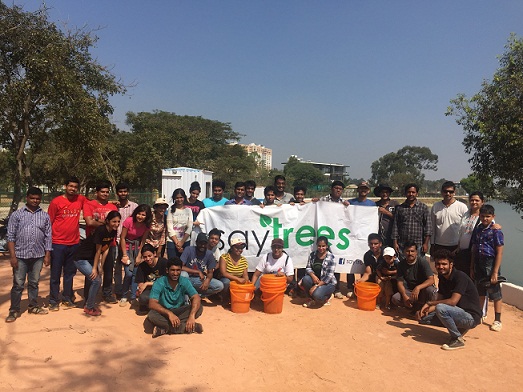
Bengaluru: “Each one, plant one,” says Durgesh Agrahari, program manager of Say Trees, a professionally run group with a perspective of long-term sustainable environment. Symbiosis Institute of Business Management, Bengaluru, (SIBM-B) in association with Say Trees organised a tree maintenance drive recently near Kasavanahalli lake in order to increase green cover in the city.
Bengaluru, Karnataka, January 31, 2016: A total of Rs.1, 95,000 was raised through Life Dart 5k Run conducted by the Rotaract Club of Symbiosis Institute of Business Management, Bengaluru (SIBM-B).
You say it. We have it. From the talent to resources, etiquettes to business culture, strength to intelligence, India has it all. Prime Minister of India, Narendra Modi’s campaign on “Make in India” calls upon investors from all over the world to invest and manufacture here in various sectors from railways to submarine, paper to plastic, electrical and electronics, media and entertainment to mining, tourism and hospitality, etc.
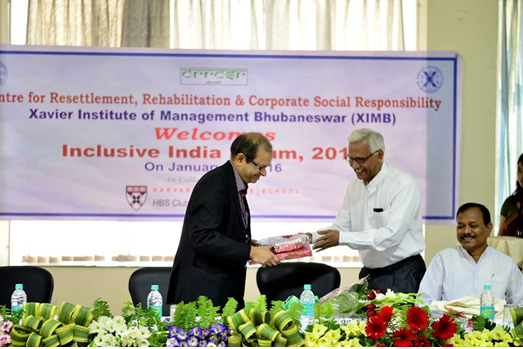
XIMB, XAVIER UNIVERSITY Bhubaneswar, known for it’s social activities, and projects related to rural development and highlighting issues of the deprived sections of the society, recently organized inclusive India Forum 2016, in association with Harvard Business School Club, India. The objective of the forum was to identify meaningful ways for corporate India to partner with NGOs in their specific areas of focus, primarily - education, employability and healthcare. Participants in the forum include members of the HBS Club of India many of whom are CEOs or a part of the leadership team of their respective companies, domain experts and leaders from several leading and reputed NGOs in India, CSR representatives from the corporate world and students of XIMB, Xavier University. The Forum was facilitated by CRRCSR (Centre for Resettlement & Rehabilitation and Corporate Social Responsibility) which reflects XIMB's efforts to blend business and development, and foster inclusive growth. It has also consulted leading corporations in Odisha on R&R and CSR issues. At XIMB Initiatives are undertaken round the year by students in association with corporate stake holders to create awareness or promote social causes and issues affecting lives at large. Earlier, Prof. Dr. Fr. Paul Fernandes S.J., Vice-Chancellor & Director, said, “XIMB has its roots embedded into tradition, through the inculcation of a value system that nurtures its students into hardcore professionals and most importantly, responsible citizens.” The CSR regulations and mandated CSR activities have now opened more gates for similar projects with shared responsibilities between corporate, NGOs and other stake holders to bring in large scale changes in the society. Known for its academic excellence and quality research work, XIMB is considered as one of the top 3 B-Schools in Eastern India, along with IIM Calcutta & XLRI Jamshedpur and has consistently been ranked as one of the best management institutes of India, ranked between 2 and 13 by all B-School ranking surveys of the country.
The central premise of this essay is to look at a critical problem that seems to bother most (if not all) effective non-profit organizations namely SCALABILITY.
Diversity is the new buzz word in HR these days. Over the last few years, companies are working hard to create and maintain diversity within their teams.
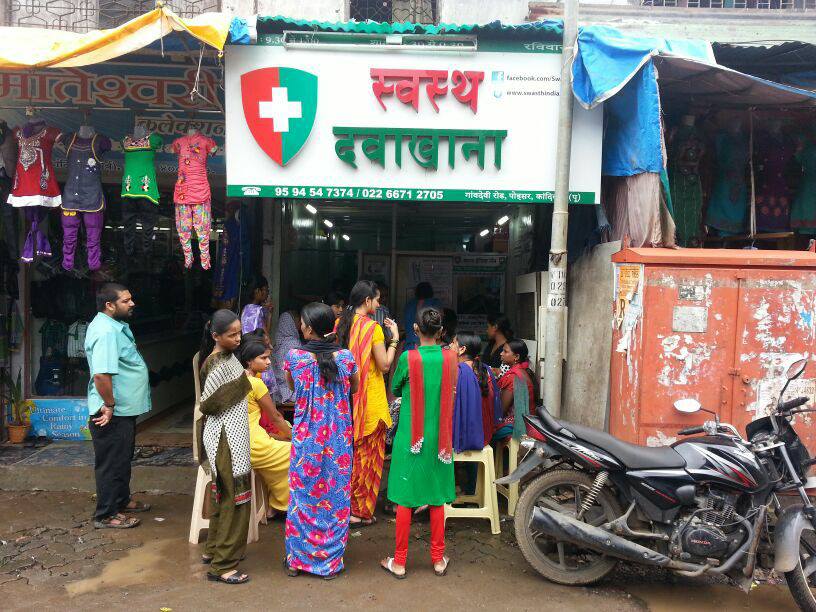
In India, approximately 80 million people live in urban areas on incomes that are below the poverty line and in Mumbai, 54% live in urban slums with inadequate access to clean water, sanitation and health facilities. They say, sickness is a great equalizer; it hits the poor and the rich uniformly, but the poor are disproportionately affected by health inequities. According to WHO estimates in 2010, approximately 71% of all spending in health care was private, but about 86% of this spending was out of pocket, which risks pushing the poor further into poverty.