

"Koi baat nahi, beta. Try harder next time."
It hit me during the car ride home. I’d been hearing this same line from my dad for years. After my 10th boards (76%), after 12th (82%), and now, again after a disastrous CAT 2023 attempt. Sitting there with a 90.45%ile, far from what I needed for the colleges I dreamt of (because of my bad profile), I wasn’t just disappointed, I was terrified! Terrified that maybe I wasn’t good enough. That despite a yearlong preparation tenure, maybe this was the best I could do. The fear wasn't just of failure; it was of repeating a pattern of living up to a version of me that never quite delivered.
Despite the CAT debacle, I somehow found the will to try for XAT 2024. What kept me going was the distance I’d already travelled: From scoring a 6%ile in my very first mock, to breaking into the 90s in CAT, I knew I was improving. I owed it to myself to keep moving forward. To my surprise, XAT went well. I scored a 97.33%ile overall, a score I never thought I was capable of. But there was a twist (always is). I had missed the sectional cutoff in the Decision-Making section. And just like that no XLRI call. Oddly enough, I wasn’t crushed.
Because for the first time I had proof that I can do much better, that I could actually crack these exams. That moment felt like a rebirth. I wasn’t starting over. I was starting stronger with belief, clarity, and a burning drive to get it right the next time.
Being a non-engineer, Quant always felt like a foreign language to me. But this time, I was determined to face it differently. I focused not just on depth, but also on breadth, something I had overlooked earlier. I realized that relying only on arithmetic and basic algebra wouldn’t be enough, especially for OMETs. So, I made it a point to also cover topics like Geometry, Logarithms, and Progressions, along with other smaller but commonly asked areas. One strategy that really worked for me was maintaining a notebook of important and tricky questions that helped build my conceptual understanding. This became my go-to revision tool, and I highly recommend this habit to anyone preparing seriously.
For learning, I stuck to free YouTube resources like:
- Rodha (for Quant basics and advanced topics)
- Unacademy (select topic-specific sessions)
When it came to DILR, consistency was everything. I made it a habit to solve 3 to 5 sets daily without fail. I didn’t aim for perfection but just regular exposure to different types of puzzles. For practice, I mostly used:
- Elitesgrid
- Aptitude Jab
For VARC, as well as for revision in the other two sections, I followed Cracku’s daily targets religiously. They helped me stay in rhythm and sharpen accuracy. I also attempted plenty of sectionals and full-length mocks, which really helped improve time management and decision-making under pressure.
Over the months, I attempted around 50 full-length mocks, and by sticking to this routine, I was able to consistently score 95%ile+ in all my mocks. This phase truly brought out the most focused, self-aware version of myself I had seen in years.
Then came CAT day. I gave it everything I had including all the discipline, pain, growth, and late nights packed into one morning. I ended up scoring a 98.34 %ile. It was a good score, one I would’ve dreamed of a year ago. But strangely, I wasn’t satisfied. I was still hungry.
Because deep down, I knew I had come a long, long way but even this score didn’t reflect my true potential. So, I doubled down on my XAT prep with everything I had. No distractions. No backup plans. Just focus!!
I predominantly practiced past year XAT question papers as full-length mocks — they gave me a real sense of the exam's rhythm.
I paid special attention to the Decision-Making section, attempting sectional tests regularly since it’s unique to XAT and needed its own strategy.
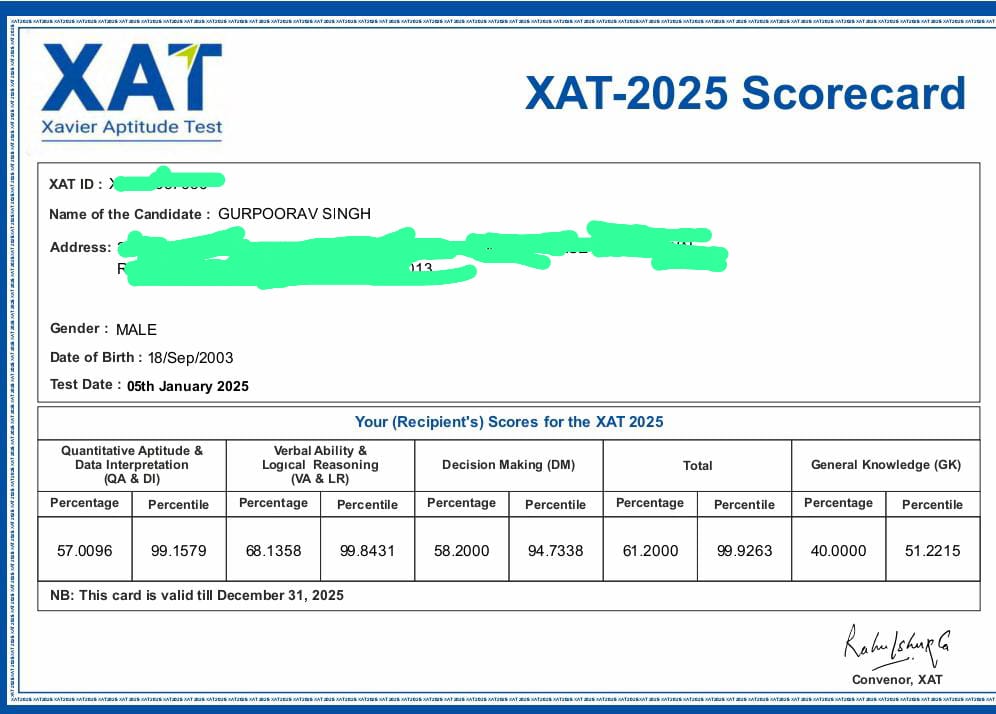
And slowly, it all started coming together. The stars aligned and I scored a 99.9263 %ile in XAT. In that moment, something shifted inside me. A strange joy took over; not loud or dramatic, but something deep and fulfilling. It was the first time I truly felt like I had done it. Like I could look my parents in the eye and say with full heart - “I made it!”
But of course, the battle wasn’t over yet. Now came the GDPI phase which was a completely new beast. I had no prior interview experience, and to make things scarier, most of my competition had work experience, strong internships, or had done this before. The fear was real. But I told myself: “I’ve come this far, why stop now?” So, I rolled up my sleeves and got to work.
And I began with something deceptively simple but incredibly powerful- reading the newspaper. I picked up The Hindu and made it a habit to read it every single day.
But I didn’t just read it passively. I had a system:
- I focused only on important happenings and especially the editorials.
- I made notes of facts, figures, and insights that I could use to build points for GDs.
- The goal was simple: “If I had to make this point in a GD, how would I say it?”
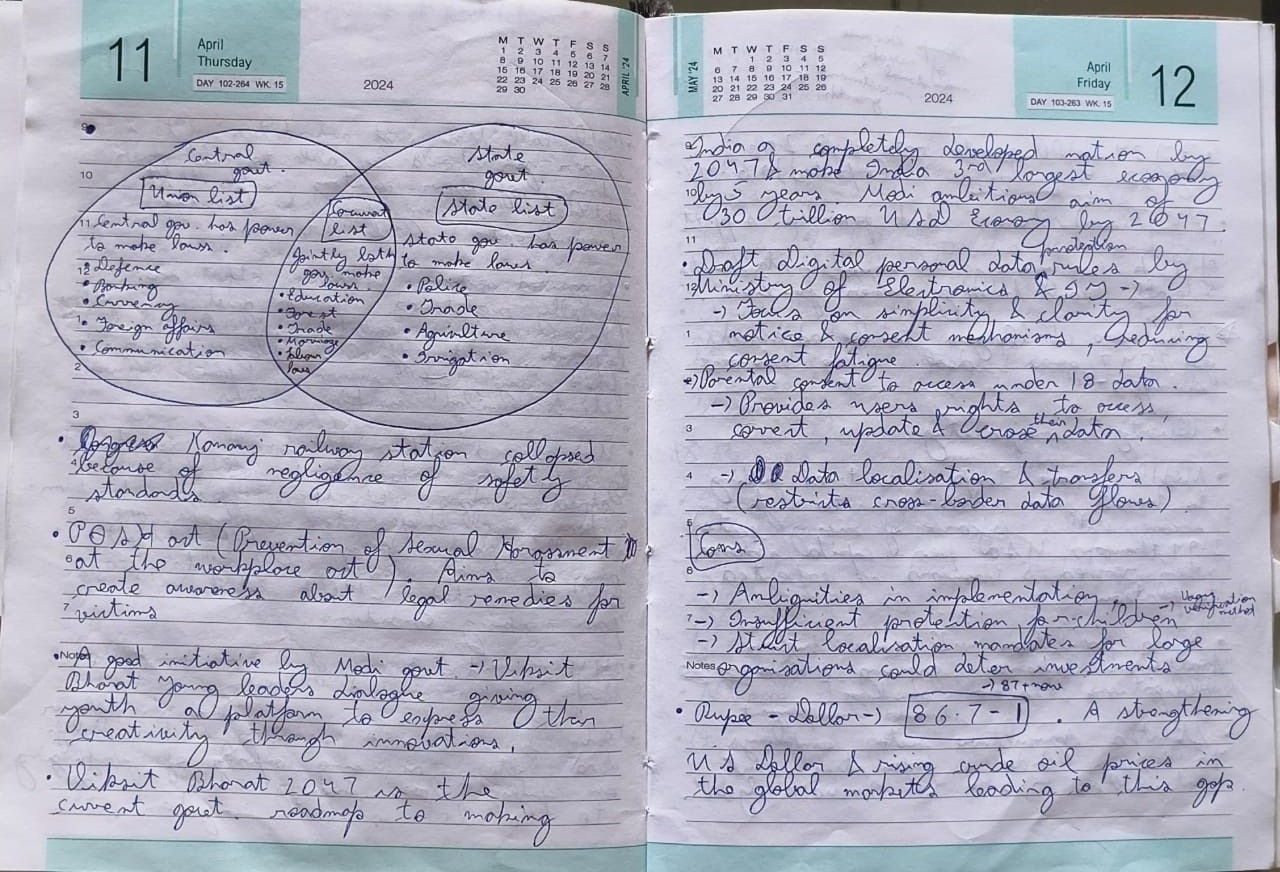
This small habit boosted my confidence and awareness like nothing else. At the same time, I took the help of AI-
- I used ChatGPT to revise my graduation subjects (highly recommended, especially if you don’t have coaching).
- I also used it to get summaries of editorial pieces.
- It saved time and gave me a fresh way of understanding topics.
Then came the personal prep- my ‘Tell me about yourself’, ‘Why MBA’, and ‘Why HRM’ answers were written, rehearsed, tweaked, and rehearsed again. I practiced in front of a mirror and tried to sound more natural each time. And then… the big day arrived. I packed my bags and went off to Mumbai for my very first B-school interview- The XLRI HRM Interview. (Which, spoiler alert, would soon become my destiny.)
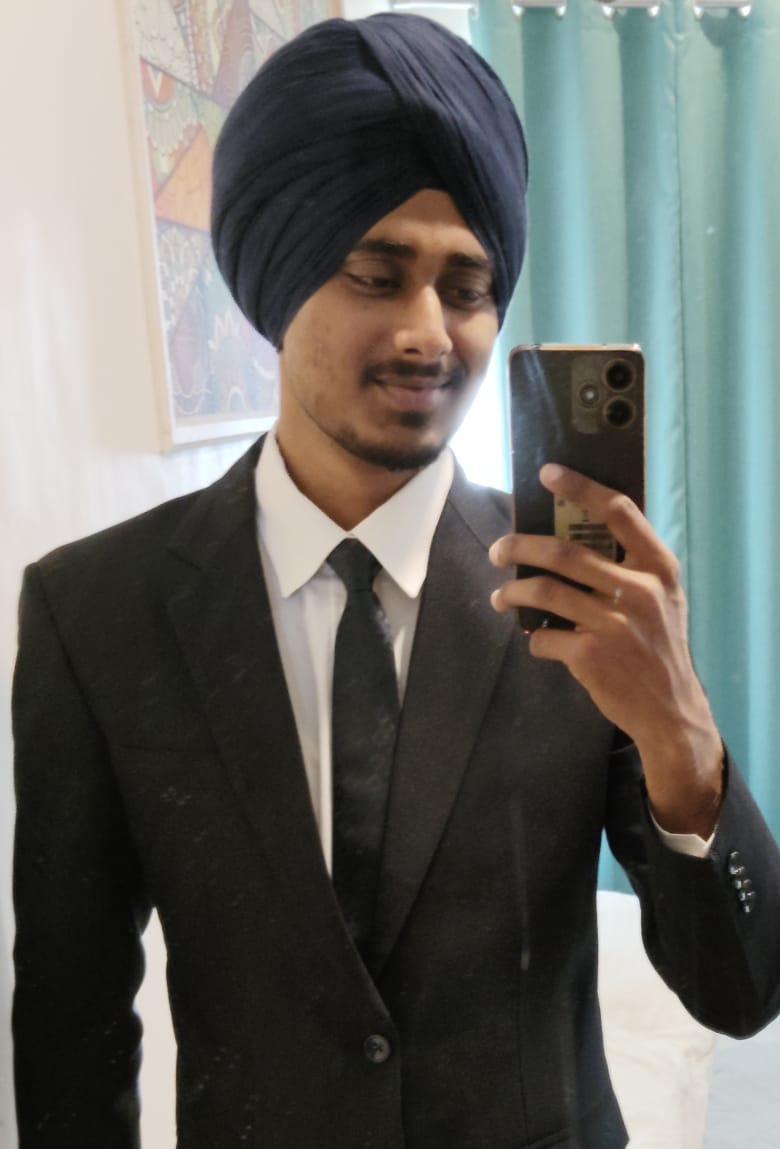
Suit up. Self-doubt’s not invited today!
Despite it being such a huge opportunity, I was surprisingly calm. Why? Because once again, I had given it my all. There was nothing more to prepare, nothing more to revise. Just time to show up. I reached Hotel President, Cuffe Parade, well before time.
But as I entered the venue, I was hit with a wave of nerves. The sheer number of students around me made it real. I took a deep breath and reminded myself: “You belong here too.” Soon, it was time for the Group Discussion.
To my surprise, it went well. My prep paid off as I had insights to contribute, and I knew how to articulate them. That’s when I learnt something important: No matter how anxious you are as a person, if you have something valuable to say, you’ll find yourself bubbling up with confidence. You’ll want to speak. And when you do, people listen. Post-GD, I couldn’t interact much with my panel mates since I was the second person to be interviewed, and they were calling people in twos (one inside, one waiting outside).
Those 15 minutes felt like a lifetime. I felt like I had mentally reviewed every decision I’d ever made in my life. Then finally, I was called in. The interview dove deep into my work experience as a medical sales representative, working with my father in the pharma company he co-founded. The panel grilled me on ethical vs. unethical practices in pharma, and how we were doing things differently. It felt like a bit of a stress interview, to be honest. And just like that… it was over in 11–12 minutes.
No big farewell. No toffee. No clue how I’d done. I walked out unsure. I thought it was over. But clearly, God had other plans. When results were announced in late April, seeing a “Merit List Convert” for XLRI PGDM HRM next to my name… Let’s just say “sheer disbelief” doesn’t even begin to cover it.
All that late-night scrolling, desperately looking for someone with average academics who still made it to a top B-school and finding almost nothing used to really get to me. It was depressing. But hey, as Gandhiji said, “Be the change you wish to see in the world.” So here I am!!