Congratulations on deciding that you want to do an MBA. You deserve a pat on the back because there are plenty of options in this world with respect to your post-grad and you must have done a lot of heavy lifting in analysing each option in-depth to reach your final conclusion.
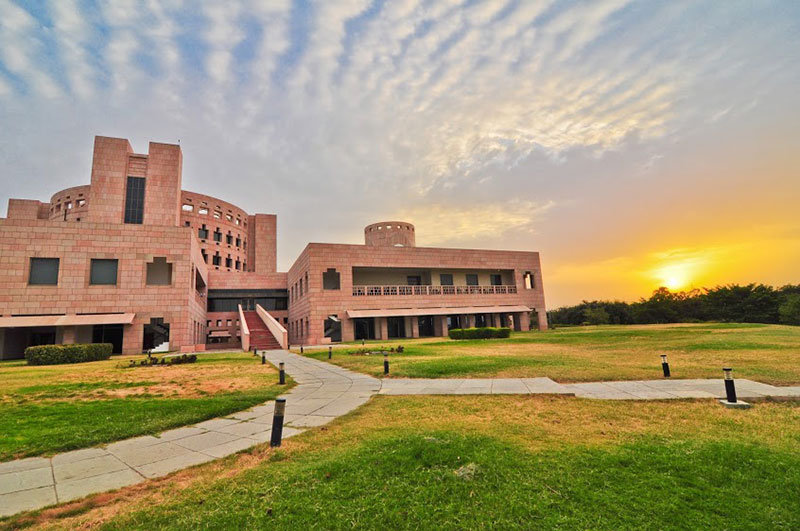
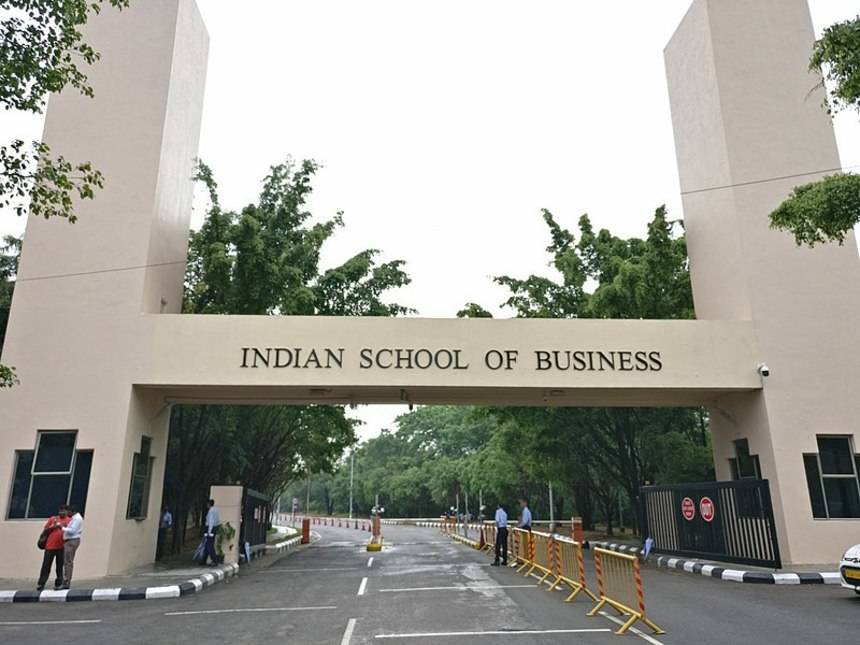
Did you know about ISB's Young Leadership Program (YLP)? Well, It is a deferred admission option given to high potential students pursuing their Bachelor’s or Master’s education. People who make it to this programme are, are ideally positioned to transform into future's exceptional business leaders. But, that doesn't mean they have it easy. They also have to go through the same stressful GMAT prep, nerve-wracking essay prompts and interviewers convincing you that you are more apt for MS than a PGP. At least, that was Vipul Soni had to go through. Vipul is currently working as a Deals Advisory at PwC DIAC and graduated out from ISB Hyderabad in the year 2019. To know more about his journey, keep reading.
In this article, we bring you Aditi Ranasaria, ISB PGP Class Of 2020. She did her B.Sc honours in Economics from St. Xavier's College, Kolkata and worked at McKinsey for 3 years, before joining ISB. Everything from Aditi’s journey, to GMAT prep, essay prompts at ISB, Interview experience and college life has been captured in this article. Read to know more!
If you are planning to go to a b-school abroad in the near future, the first step to that plan is preparing for GMAT. A high score these test can help you to get into the b-school of your choice. In order to boost your GMAT prep in easier and cost-friendly manner, we bring you a list of apps and online courses that you can take-up in order to ace the tests. Read to know more!
Kaushik Subramanian was placed in L'Oreal, one of the highly coveted companies recruiting at MICA. He had a good run there, getting the opportunity to work on some very memorable projects. However, there was a lot more that he wanted to do with his career. Recognising that he would need to up-skill himself far more, he decided that it was time to do a second MBA. If you aspire to achieve great heights of success in your career, Kaushik's story will appeal to you. Watch this video and find out what his experience was!
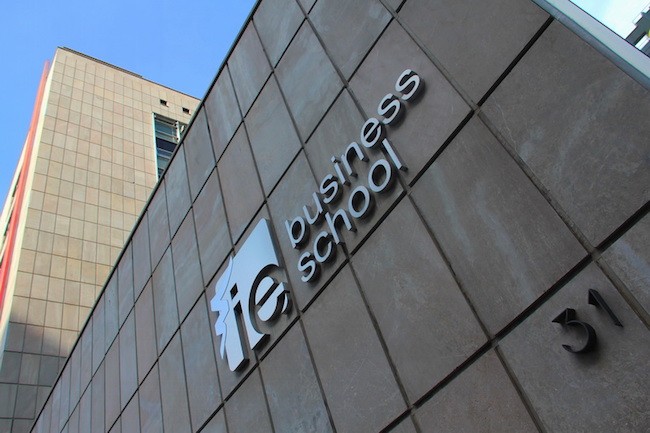
Prateek Jain is an alumnus of IE Business School, Class of 2018. He works for a listed entity in agrochemicals space where he is associated closely with the leadership team at the organisation and work on strategic initiatives. Finance has been his mojo and solving problems in an innovative, cost-effective manner has been his passion. Recently, we spoke to him to know his experience of studying at one of the best B-Schools in Europe (and the world!). Read on to find out how Prateek made it to IE Business School, his learnings there and the advice that he has for you.
How did you prepare for the GMAT? What resources did you use? What were your weak and strong sections and how did you improve your weaknesses?
Self study, online tutorials and test series (Kaplan, Veritas), official GMAT guides.Verbal (CR & RC) were my weak areas and quant was my strength. More of practice, followed by a detailed analysis of the mock exams were quite helpful.
Could you tell us how you went about answering the essay prompts at IE?
Introspection is the key to writing the essays. At first, it would appear that we are swimming and the shore is quite far. A methodical, disciplined and a thoughtful approach is required. I started off with writing down basic drafts of the essays to get into the mode, speak to people, edit and re-edit my essays, doing my bit of research online, speaking to alumni, students and professors.
Did you use the services of an admissions consultant? If yes, how did they help and would you recommend consultants to IE applicants? If not, how did you go about drafting your application?
Yes, I did use the services of an admissions consultant, primarily because I could leverage on their experience, and put me into a disciplined approach of solving things. Moreover, I was also lucky enough to consult some of my family members who knew me well and could give me an unbiased opinion and suggestion. Using a consultant comes at a heavy cost and hence, one should evaluate the pros and cons while deciding on the same. IE's essays are just non-technical and best to be written on their own. It actually brings out the real you within yourself.
What made you choose IE? Did you apply to other institutes?
IE's heavy focus towards entrepreneurship, its diversity and the plethora of interesting electives made me fall in love with the course. I did apply to other institutes but the batch diversity was a major decision criteria for me to select IE. I had studied and worked most of my life in India and this was a great chance to learn about cultures, businesses, practices and people from across the globe.
How was your IE interview experience? What questions/type of questions were you asked?
The best part about IE's application is that almost everyone gets an interview call. This is primarily because IE believes an applicant is way above his/her GMATs and essays. They would want to speak to an applicant and then get into the decision mode. I was interviewed by an alumnus of my school, with a close match to my profile and interests. The interview was mostly behavioral in nature and it was more of a conversation wherein I shared my story and the interviewer shared her experiences. Towards the end of the interview, we both learnt a lot from each other.
What in your opinion makes up an ideal candidate for the MBA program at IE? What kind of stand out qualities is IE looking for in candidates? Why do you think you made it?
If anyone is looking for an MBA as a platform only to increase salaries, get placements then IE is just not the school. In fact, any foreign b-school, unlike many of their Indian counterparts do not act as placement agencies. Life during an MBA is much more than jobs, grades and curriculum. Also, IE's focus towards inculcating an entrepreneurial spirit into one's mind is what differentiates it from its counterparts. IE looks out for a diverse set of qualities and hence, there isn't a rule book. One could have had pathetic grades but a wonderful professional experience inspiring and teaching others (or vice versa) and you can have an admit in IE. Fitment into the class and the culture are of utmost importance. I was lucky enough to make it to IE because of my rich professional journey, teaching me about the struggles of starting up, surviving and winning. I was lucky enough to fit in the cohort and stand out as an excellent professional with a deep function expertise.
In retrospect, what do you think of your decision to join IE? What were your learnings, and what will you take away from the one year spent at the institute? Is it worth joining one of Europe's most expensive business schools?
IE has been one of the best decisions of my life. I learnt to respect and accept differences. I learnt to fall and rise, and I learnt that no matter how good you are, there is always someone better. IE also gave me a chance to make friends in almost every habitable country of the globe, call myself a globetrotter, be a hustler and the fact that there is no end to learning. When it comes to a decision as to whether one should join a b-school or not (rather an expensive one), one should weigh out the options, current situation and future path. Some might be in a comfort zone (job/family etc) and might not want to disturb it. Some might be a hustler and hates status quo. The economic situations, geographical conditions etc are also factors to be included in the decision. The biggest mistake that people make is by comparing apples to oranges - Mr. XYZ might have done his MBA, secured a hefty figure job but that specific sector might not be your calling, the timing might have been great, his financial situation might have been different than yours. So it is my sincere advice to the masses running behind an MBA - stop and think why do you want to do it, how can it add value to you in your personal (yes it does) and professional (at times, it doesn't) lives. BEWARE. You do not want to end up learning nothing but earning just a degree and some good (read - bad) debts.
Any suggestions to the aspirants who are vying for a seat at IE?
Prepare yourself for a roller coaster ride. A year of courses, and you blink and it gets over in no time. Wonderful place to be, lovely people all around, excellent curriculum and a great institution in itself. #IEforlife
A month into lockdown, and it's clear that the COVID-19 pandemic is not one to be taken lightly. While there is an immediate health and safety concern, there are a ton of repercussions that are soon to be felt by everyone around the world. Right now, you might be worried about placements and summer internships, but an event such as the coronavirus crisis has long lasting effects. So, let's take a look at some of the predictions that experts have made based on the current situation.
One of the biggest fears of GMAT test-takers was the cancellation of the exam due to the Coronavirus lock down - a fear which was mitigated by GMAC as the exam is now available online. However, GMAC has announced some major changes to the at-home version of the exam, and these changes have left test-takers unnerved, confused and angry. From not being able to use pen and paper during the exam to no breaks in-between the 3 hour exam, these are the changes GMAC has brought to the at-home GMAT test, and here's what test-takers have to say about it.