
Bring Back The 'Human' To Human Resource
Why are current employees disengaged? Why prospective employees dislike the HR Department?
Samriddhi Sahu
Why are current employees disengaged? Why prospective employees dislike the HR Department?

A company or an organisation is only as good as the employees that work in it. And you as HR Managers or to be HR Managers, will be responsible for bringing the best out of your employees. If a laptop breaks, you can just call for another one, but when an employee leaves, albeit replaceable to a certain extent, the cost is higher. Processes, from recruitment to employee engagement and appraisal is in your hands. Since being in HR involves dealing with people every time, the most important skill that you need to garner is the ‘people skill’. Although this list of books is in no way comprehensive, it offers a way to get you started. And why learn from your mistakes when you can learn from research and mistakes made by others?

One of the perks of being an HR from TISS (Tissian) is that you get to experience at least 4 Organisations as a Fieldwork Intern. Besides getting technical know-how of Human Resource Management (HRM), Fieldwork is also an interesting case-study of Human Behavior. We are taught Organizational Behavior in detail across the 4 Semesters and if you ask me that is the most interesting part of being an HR student. So welcome to the curious case of the dieting HR fraternity.

Think back to your interviews, think back to your organisations. Think back to your boyfriends, your clubs and your groups. At some point in your life till now, you must have received an answer, ‘We don’t think you would be a right fit for this place/organisation/my life…’
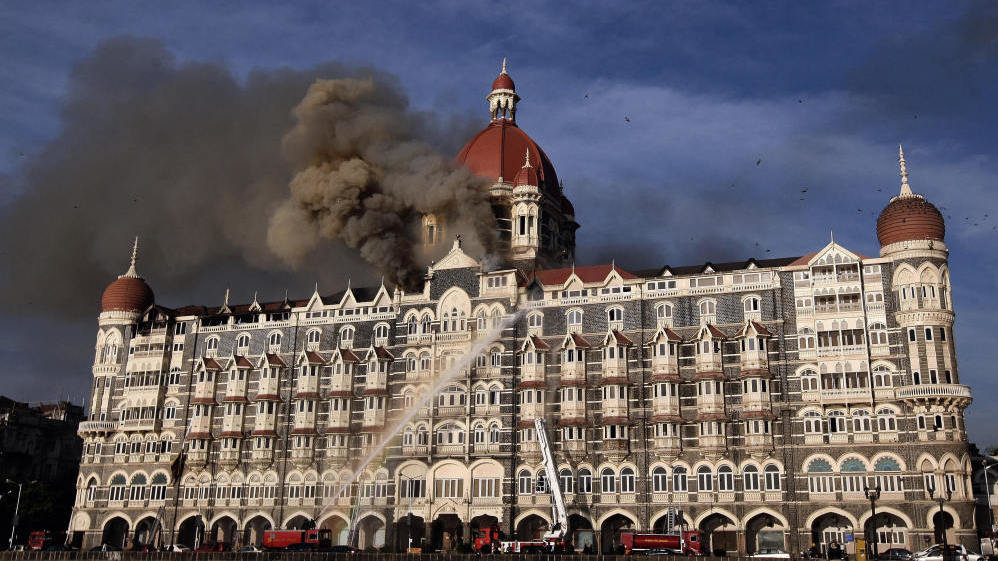
On November 26, 2008, Mumbai was held hostage. Gunmen stormed into many prominent places in the city and shot down people. One of these places was the Taj Mahal Hotel. Stories of exemplary courage and sacrifice emerged, as ordinary citizens of Mumbai stood united in the face of terror.

Experiencing a plethora of opportunities and salvaging on different flavors would be the modus vivendi of the workforce in the years to come. More frequent shifts in industries, jobs, locations and companies would extensively be practiced by the upcoming working class. By far, the world has witnessed personalities who have acquired proficiency in a particular job for decades and went on to hold key leadership positions eventually. N. Chandrasekaran, current CEO of TCS being a prime example of the same. But this would not be the case in future. In the upcoming years, Job involvement would be similar to the present levels or may be more but the job satisfaction may go for a toss. Employees would want to experience new roles and responsibilities over the span of their career instead of attempting to scale new heights in one particular industry. People are not to be blamed for becoming so dicey on the jobs that they would take up. The gamut of opportunities would turn out to be too attractive to be ignored. Thus, Talent mobility in the next decade with the globally connected workspace would set the world stage for the competitive spirits to display their expertise in varied fields. The workforce in turn would have some of the qualities that will set them apart from the present scenario.

HR analytics seems to be the latest buzz word within HR these days with its potential to transform HR practices, and the way HR is perceived in organizations. HR policies and processes have always played a huge role in business strategy, but quantifying their impact has always been a problem for human resources (HR) executives. Gut feeling and historical practices determine the answers to questions such as “Which method of performance appraisal will yield the best results?” or “What is the impact of training programs on the business' bottom-line?”

Why are current employees disengaged? Why prospective employees dislike the HR Department?
A company or an organisation is only as good as the employees that work in it. And you as HR Managers or to be HR Managers, will be responsible for bringing the best out of your employees. If a laptop breaks, you can just call for another one, but when an employee leaves, albeit replaceable to a certain extent, the cost is higher. Processes, from recruitment to employee engagement and appraisal is in your hands. Since being in HR involves dealing with people every time, the most important skill that you need to garner is the ‘people skill’. Although this list of books is in no way comprehensive, it offers a way to get you started. And why learn from your mistakes when you can learn from research and mistakes made by others?
One of the perks of being an HR from TISS (Tissian) is that you get to experience at least 4 Organisations as a Fieldwork Intern. Besides getting technical know-how of Human Resource Management (HRM), Fieldwork is also an interesting case-study of Human Behavior. We are taught Organizational Behavior in detail across the 4 Semesters and if you ask me that is the most interesting part of being an HR student. So welcome to the curious case of the dieting HR fraternity.
Think back to your interviews, think back to your organisations. Think back to your boyfriends, your clubs and your groups. At some point in your life till now, you must have received an answer, ‘We don’t think you would be a right fit for this place/organisation/my life…’
On November 26, 2008, Mumbai was held hostage. Gunmen stormed into many prominent places in the city and shot down people. One of these places was the Taj Mahal Hotel. Stories of exemplary courage and sacrifice emerged, as ordinary citizens of Mumbai stood united in the face of terror.
Experiencing a plethora of opportunities and salvaging on different flavors would be the modus vivendi of the workforce in the years to come. More frequent shifts in industries, jobs, locations and companies would extensively be practiced by the upcoming working class. By far, the world has witnessed personalities who have acquired proficiency in a particular job for decades and went on to hold key leadership positions eventually. N. Chandrasekaran, current CEO of TCS being a prime example of the same. But this would not be the case in future. In the upcoming years, Job involvement would be similar to the present levels or may be more but the job satisfaction may go for a toss. Employees would want to experience new roles and responsibilities over the span of their career instead of attempting to scale new heights in one particular industry. People are not to be blamed for becoming so dicey on the jobs that they would take up. The gamut of opportunities would turn out to be too attractive to be ignored. Thus, Talent mobility in the next decade with the globally connected workspace would set the world stage for the competitive spirits to display their expertise in varied fields. The workforce in turn would have some of the qualities that will set them apart from the present scenario.
HR analytics seems to be the latest buzz word within HR these days with its potential to transform HR practices, and the way HR is perceived in organizations. HR policies and processes have always played a huge role in business strategy, but quantifying their impact has always been a problem for human resources (HR) executives. Gut feeling and historical practices determine the answers to questions such as “Which method of performance appraisal will yield the best results?” or “What is the impact of training programs on the business' bottom-line?”