
Journey to IIM Calcutta: From juggling internships across countries to navigating career disappointments, and finally acing CAT with a near-perfect percentile, fueled not by months of coaching but by free resources, a tight timeline, and a hunger to grow beyond limitations.
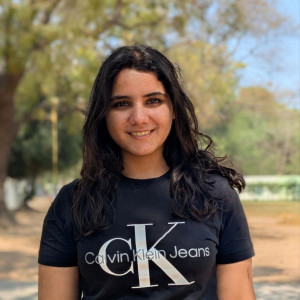
Sauhaard Batra's story is a masterclass in resilience, clarity, and calculated hustle. A Computer Science graduate from IIT Jammu (Batch of 2024), Sauhaard is now headed to IIM Calcutta, one of India’s most coveted B-schools. In this interview, he opens up about the grind, the heartbreaks, and the moments of introspection that shaped his remarkable journey. Connect with him on LinkedIn.
Profile: 2024 grad, 11 months work ex, 91% (ICSE) 10th, 93.2% (CBSE) 12th, 84% graduation IIT Jammu CSE
Q1. Where does your story begin?
My journey begins in Chandigarh, where I was raised by two working parents. My dad had a transferable job, so I was mostly brought up by my mom. I spent a large part of my early childhood in crèches, often in unfamiliar environments. It wasn’t always easy, but those years taught me how to adapt quickly, become self-sufficient, and manage emotions independently from a very young age.
At YPS Mohali, I found my rhythm. The school emphasised extracurriculars as much as academics. I trained in lawn tennis at the academy level and competed nationally in quizzes—winning the city round of Bournvita Quiz Contest, placing 1st in Punjab and 6th nationally in the Oakridge Quiz, and came 1st in the PPS Nabha Knowledge Conclave National Quiz. I also performed well in Olympiads organised by SOF, Silverzone, and Unified Council, and cleared the first stages of NTSE, RMO, and NSEA.
These experiences shaped my confidence and my love for problem-solving. Competitions like Robochamps, Maths Challenger League, and Scholars League laid the foundation for the analytical mindset I carry with me today.
Author’s Perspective: We often forget to give ourselves credit.
What struck me most while writing Sauhaard’s story is how much of our strength is shaped early on—through school wins, childhood challenges, or the quiet discipline we showed long before anyone was watching.
We must remind ourselves: we’ve all done something.
Whether it was winning a quiz, solving Olympiad problems, leading a college club, or simply enduring hard days, those moments matter. They built your confidence once, and they can do it again.
“You could do it then. You can do it now.”
Don’t undervalue your past. Let it remind you of your future.
From Arts Topper to IIM-Lucknow
Q2. I believe you ended up at IIT Jammu for your undergrad. Was that a conscious choice? What was your experience like at IIT Jammu?
IIT Jammu may be a newer IIT, but for me, it was a place of growth. With a smaller batch size, I could truly immerse myself in academics, leadership, and creative pursuits. I co-founded the Literary Club, hosted events like Spell Bee and an arts & crafts exhibition, anchored the cultural convocation, and represented my college at the Inter-IIT Cultural Fest 2023 in Kharagpur.
In the Inter-IIT Tech Meet 2022, I led my team to a third-place finish in a challenging trading bot competition. I also received recognition at IIT Hyderabad’s “My Heartthrob” story contest and at IIT Jammu’s Writers’ Meet. I mentored juniors through the Coding Club, where I found my voice as a leader.
Most importantly, I formed some of the strongest bonds of my life there, particularly with “The Boys,” a tight-knit group of eight friends who’ve stood by me through thick and thin. In an environment where everyone knows everyone, the sense of community ran deep, something I might not have experienced elsewhere.
Q3. Tell us about your internship experiences. How did they shape your interest in management?
In my penultimate year, I explored two distinct areas through internships: software engineering at Money Forward Inc., Japan, and applied research at the University of Calgary through the MITACS Globalink program.
Balancing both taught me a lot about discipline, time management, and communication across cultures. At Calgary, I worked on a Deep Q-Learning solution to optimize global logistics. This project showed me that I was more drawn to decision-making than pure execution.
That realisation sparked something deeper in me. I didn’t want to restrict myself to a single technical domain, quietly coding at a desk. My passion for coding ultimately culminated in realizing I wanted to solve problems at a higher level of abstraction, lead from the front, and align business objectives with real-world impact.
This also aligned with another side of me—someone who has always enjoyed organizing events, anchoring shows, hosting fests, reciting poetry, or moderating debates. I’ve always found energy in connecting with people. So it became clear—I wanted to be someone who drives change with both numbers and nuance.
Author’s perspective: If you're drawn toward management, chances are there’s already an experience in your life- perhaps subtle, perhaps long past- that nudged you in this direction. Maybe it was the time you led a team, solved a real-world problem, or simply realized you wanted to impact decisions, not just execute them.
Spend time reflecting on those moments. Dig deep and bring that experience into your GDPI story. When you connect your “why” to something real and personal, interviewers see your vision more clearly.
These reflections aren’t just for the panel—they’re for you. They’ll motivate you during CAT prep, anchor you through GDPI stress, and carry you through the two challenging years of B-school.
Experiences like these bring clarity, and clarity is what prepares you for the life ahead.
Making it into IIM Bangalore: CAT Prep with a job
Q4. What was your professional experience post-graduation?
After graduation, I joined PACE, working on high-frequency trading strategies. The work was technical and fast-paced, but I found it lacking in personal meaning and culture-fit. That disconnect made me look for something broader.
After the startup experience, I joined MECON Ltd, a Miniratna PSU, and was posted in Ranchi. It was a relaxed workspace, which gave me breathing room to think. Around that time, I was still unsure of my direction. I kept exploring different fields. But somewhere inside, a quiet thought began taking root: maybe I should give CAT a shot.
Later, I got transferred to Bangalore, where my parents were residing as well. With more control over my environment and schedule, and their able support, I decided to take a bold step—I started preparing for CAT in mid-October, and once I qualified, I took two months of leave without pay to prepare for GDPI from February to March. I knew the window was short, but I was ready to give it everything.
Q5. You had barely a month. How did you structure your prep?
Since I had just about a month to prepare, I knew I wouldn’t be able to utilize even the freely available resources fully, let alone paid ones. So I focused on a few high-impact free materials. For Quant, Rodha’s YouTube lectures helped build strong conceptual clarity. For VARC, I relied on Unacademy and Gejo’s YouTube channel. For DILR, I solved 25 carefully selected sets from Cracku.
I also gave a lot of mocks—on some days, up to two full-length mocks. Beyond that, Previous Year Papers became my mainstay. I attempted them with a timer on the IQuanta website, which offers them for free. It was all about focus and depth over breadth, and the strategy worked.
I worked with generally free yet high-leverage resources:
● Quant: Rodha’s YouTube lectures
● VARC: Gejo’s RC strategies and Unacademy videos
● DILR: 25 curated sets from Cracku
● Mocks: A lot—some days I did two full mocks
● Previous Year Papers: Attempted on the IQuanta platform
Instead of trying to cover everything, I chose to go deep into what mattered most. It was about focus over volume—a decision that made all the difference.
Author’s perspective: It is never too late to start chasing your dream.
Even with just one month of unwavering dedication—when backed by a lifetime of grit—you can achieve what may seem impossible, even to someone who’s had a whole year to prepare. Time is relative. Intent is everything.
Don’t let a lack of time or a surge of self-doubt paralyze you. Use what you have. Research, make a plan, and start moving. The path won’t be perfect, but it might just be enough.
You might just get there—right on time.
Q6. VARC tends to be tricky for engineers. How did you tackle it?
In the one month I had, I focused heavily on sectional tests comprising only RCs, particularly from TCYOnline and Rodha, and made it a point to analyze every mistake with intent. I’d compare my chosen option with the correct one and try to understand exactly where my logic diverged from what the solution demanded.
Over time, I began viewing RCs as structured logical reasoning with a hint of vocabulary, rather than just a reading exercise. To further sharpen that logic, I practiced statement-conclusion type questions—even though they don’t appear in CAT, they helped train my brain to evaluate arguments critically. These methods gave me the confidence I needed in my weakest area.
Q7. What was D-Day like?
Surprisingly calm. Just before the exam, I spoke to three of my closest friends. Those few minutes helped me breathe, smile, and stay grounded.
During the test, I found myself humming a song to stay relaxed. I attempted fewer questions than usual—15 in DILR and 16 in Quant—but I had developed the habit of sharp question selection. I knew which ones to skip. That clarity helped me get 100% accuracy in both sections.
Author’s perspective: D-Day is just as important as your preparation. All the effort in the world won’t translate unless you walk in calm, clear-headed, and composed. That mindset allows you to make the most of everything you’ve practised.
But also- take it with a pinch of salt.
Not every exam day will go your way. One bad day should never redefine your worth. What truly matters is the courage to show up, again and again, regardless of the outcome.
Let your preparation empower you- but let your perspective protect you.
Q8. What role did your support system play?
Crucial. Absolutely crucial. I had the privilege of engaging with fellow aspirants from across the country—some from Reddit, Telegram prep groups, and my GDPI coaching institute. As an extrovert, I thrived on those conversations.
Through it all, Shibashis Ganguly, my mentor, was a constant. No query was too trivial, no hour too late. His calm guidance and real-world insights were invaluable.
But the real pillars of strength were my parents—Manoj Batra and Simran Girdhar—and my Nanu-Nani. When my scores hovered at 100, my mom would gently nudge me: “Get it to 115.” On D-Day, I scored 138.6. This wasn’t just my result—it was our victory.
Q9. What advice would you give to CAT aspirants?
“Sometimes, your lowest point is just setting the stage for your biggest breakthrough.”
This journey is long and mentally exhausting. There will be doubt, silence, and days you feel like giving up. But with a good support system and inner clarity, you can push through.
Don’t abandon a paper midway just because one section went badly. Some B-schools don’t have sectional cutoffs. Stay in the fight. Keep showing up.
Final Thoughts
From a childhood in crèches to a seat at IIM Calcutta, Sauhaard Batra’s story proves that preparation is only one part of success. Grit, adaptability, and strategic clarity matter just as much. If you're reading this while battling your own uncertainty—remember:
“You don’t need everything to go right. You just need the courage to keep going when it doesn’t.”
Read More:
- DILR Strategies to Score a 99 Percentile
- Free Formula Book for Quants
- From a Failed UPSC Attempt to IIM-C
- From Journalism to IIM-K
- VARC Guide For Engineers
- 5 VARC Strategies to Begin Your Comprehension Game
- Staying consistent with the 6-month-long CAT journey