
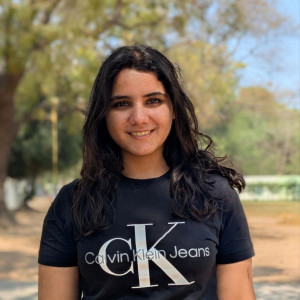
In this candid conversation, we speak with Kashish Pragya Ghosh,a 2024 graduate from IIM Kozhikode who is now part of the prestigious Aditya Birla Group Leadership Program. A B.Tech from IIT Delhi, her journey is a mix of ambition, self-discovery, and practical choices - the perfect read for CAT aspirants and B-school joiners trying to make sense of the road ahead.
Q: What was your background before pursuing an MBA, and what led you to take the leap?
I come from an engineering background - I did my B.Tech from IIT Delhi in 2021, and right after that, I started working at IQVIA in a consulting role. Consulting gave me a strong start and good exposure to structured problem-solving, but over time, I realised that it wasn't something I wanted to do long term.
The lifestyle, especially the long hours and constant pace, started to feel limiting. I have a strong creative side. I love dancing, doodling, creating content on Instagram, and playing basketball and badminton. I managed to do them even during college, but during the job, I missed having the time and energy for those things. I wanted a career that allowed for both professional growth and personal balance.
That’s when I started exploring broader business roles, and eventually decided to pursue an MBA. Interestingly, I only discovered my interest in General Management after joining B-school - once I saw the variety of roles and the flexibility the path offered, it felt like the right direction.
Q: What was your CAT prep journey like? Any advice for aspirants?
My CAT prep was split across two years. In college, I had joined a TIME classroom program, but didn’t take the exam as COVID happened. The second time around, I knew I had to give it a proper shot. I did have the preparation from last time backing me, but I had to put in the effort all over again.
I had a strong support system at home and work, which helped me stay consistent. But even then, VARC or Quant wasn’t a cakewalk, despite being an engineer. People often underestimate the exam because the syllabus looks familiar, but it’s not about knowing concepts, it’s about applying them under time pressure. I revised all the formulas and practised a hell lot.
So my advice would be, don’t be overconfident or dismissive. CAT needs a serious, strategic approach. Consistency, mock analysis, and time-bound practice are key.
Q: You had other options — why did you choose IIM Kozhikode? And how should someone think about dropping a year for a better brand?
IIM Kozhikode was my best admit at the time, and I did consider taking a drop to aim for a higher percentile and try for ABC next year. But I had to be brutally honest with myself - I wasn’t sure I could sustain the same level of motivation and focus for another year. In fact, I felt I might actually perform worse if I burned out.
It’s a serious risk- you might end up not converting even the college you already have. And in hindsight, I’m so glad I didn’t drop. Choosing IIMK turned out to be one of the best decisions I made.
The campus, nestled in nature, gave me the space to reflect and grow. The diversity of the batch, in terms of age, background, and experience, completely changed my outlook. I met amazing people, found my passion for various domains across businesses, and today I’m genuinely happy with the job I’ve landed. I wouldn’t change a thing.
Q: What part of the MBA journey transformed you the most?
One of the most transformative parts of my MBA journey was the diversity of the batch. At IIMK, you're surrounded by people from all walks of life- different ages, academic backgrounds, and work experiences. Coming from an engineering background, this was refreshing and eye-opening for me. You start seeing the same problem through multiple lenses- whether it's how a commerce graduate approaches a case, or how someone with five years of work experience tackles group projects.
This kind of exposure prepares you for the real world, where you’re expected to collaborate and lead in equally diverse settings. In fact, in my current role at ABG, I’ve had to lead teams where people more experienced were reporting to me, and that’s a dynamic you learn to handle during your MBA. You pick up soft skills that aren’t taught in any course- like empathy, communication, and understanding what truly motivates people.
On a more personal note, I also had a life-altering moment when I met with an accident during the third term, and that became a turning point. In such a competitive environment, you don’t always expect people to step up for you. But my friends, even acquaintances, went out of their way to help.
It taught me how deeply human connections matter, even in high-pressure ecosystems. That experience made me value friendships, empathy, and the kind of support system you can build in B-school if you're open to it.
Q: Did you discover your interests at IIMK, or did you enter with clarity?
Once I joined IIMK, I was exposed to so many new fields — through courses, competitions, and conversations. Marketing was something that clicked with me during the core terms, so I made sure to take it up in my electives. I also worked on live projects with stealth startups, which helped me discover sectors and domains I had never considered before. Somewhere along this journey, I realised that General Management would be a great fit.
The combination of variety and flexibility made GenMan a very attractive path. You’re not boxed into one function, and you get to learn by doing- across strategy, operations, marketing, and more.
Q: What should a fresher do before joining a B-school to hit the ground running?
The first thing I would say is — don’t be afraid to ask for help. One of the nicest things about IIMK was how approachable everyone was. Seniors are more than willing to guide you, be it academics, competitions, or placements. Make use of that support system.
Academically, if you’re someone who doesn't come from a commerce background, it really helps to brush up on basics, especially finance and accounting. There are many good online resources and even pre-MBA bridge courses that can ease the transition.
Also, come with an open mind. You might have some idea of what you want to do, but allow yourself the flexibility to explore. The two years go by really fast, and it’s a great chance to try new things — whether it's a new subject, a case competition, or a cultural club.
Q: How did you narrow down on General Management and prepare for roles like ABG’s?
A lot of it started with conversations with seniors who had joined General Management programs, including the one at Aditya Birla Group. Hearing their experiences helped me understand what the role entailed- the cross-functional exposure, the opportunity to work with senior leadership early in your career, and the long-term growth potential.
I realised that ABG’s values resonated with me. Their work culture places a lot of emphasis on integrity, commitment, and people-first leadership, which aligns with my own principles. I also liked that they don’t expect you to come in as a finished product. They really invest in your growth during the one-year training period.
The placement process was quite smooth but also very competitive. For General Management roles like ABG’s, they’re looking for people who can adapt quickly, think strategically, and communicate effectively. There were multiple rounds — psychometric test, aptitude test, group discussions, personal interviews, and a final round with senior leaders. Each stage tested a different skill.
What helped me stand out, I think, was the range of things I had tried during my MBA — live projects, leadership roles in clubs, academic performance, and even things like content creation. I was able to present them in a way that aligned with the program that they were offering. I wasn’t trying to project one fixed mindset. I was honest about the fact that I had explored, made some choices, and was still growing. They appreciated that openness.
I think the most important thing is to be authentic. The interviewers are sharp; they can see through rehearsed answers. It’s more important to be self-aware, clear about why you’re choosing this path, and honest about your journey. That’s what worked for me.
Q: What’s your current role at ABG like, and what makes it exciting?
I’m currently part of the Aditya Birla Group Leadership Program, which is a cross-functional, cross-sector rotational experience. It’s been a fantastic experience so far. The role is rotational in nature, that is you get exposed to multiple sectors and functions within the conglomerate.
First, I worked in ABMCPL, in Business Review Council, getting an overview of metals and cement businesses. Next, I was lucky to get a plant exposure, which usually isn’t the case in other programs. I was working with the production team at Aditya Birla Power Composites Limited, an insulator plant at Halol, Gujarat. That humbled me, gave me exposure to onground operations, which otherwise I wouldn’t have sitting in a corporate office. My latest stint was in Retail with Novel Jewels - Jewellery Business of Aditya Birla Group.
That’s a whole different kind of learning — managing senior stakeholders, building influence, understanding ground realities. The leadership exposure here goes beyond what textbooks can offer. It's intense, but incredibly rewarding.
What excites me most is the kind of responsibility they give you early on. I’ve been in rooms with senior leadership, contributed to decision-making processes, and even led parts of projects. The work culture is extremely people-centric — the leadership is supportive, approachable, and genuinely invested in your growth. That makes a huge difference when you’re starting out in your career.
Q: Any learnings or regrets from your MBA journey?
Honestly, it’s easy to say “I wish I had done this or that” in hindsight, but I also believe every choice — even the ones that didn’t work out perfectly — taught me something valuable. So, not regrets, but yes — I’d tell my younger self to enjoy the journey more. It’s very easy to get stuck in a loop of chasing CV points, worrying about placements, and constantly comparing yourself.
What really stays with you are the experiences, the friendships, and the small wins. Also, one non-negotiable I learned was discipline. You have to crack the time management code early on, it’s the one skill that carries through everything. There’s always something happening, whether it's academics, competitions, placements, or social events.
Q: What would you tell MBA aspirants who want to work in conglomerates like Aditya Birla Group?
First and foremost, understand what General Management roles really offer. These are roles that demand flexibility, people skills, and a willingness to step out of your comfort zone. You’ll be exposed to multiple sectors and functions, sometimes without prior experience in them, and you need to be open to learning on the go.
Start with introspection- know what kind of culture and role suits you. Leadership programs at conglomerates like ABG are not just about high performance but about long-term potential and value alignment.
Do your homework. Talk to seniors, read about the companies, and understand their values and leadership styles. Cultural fit matters a lot in these programs. For example, what drew me to ABG was their emphasis on integrity and people-first leadership. That alignment made it easier to navigate the interviews and the job itself because I wasn’t pretending to be someone I’m not.
Focus on building clarity, not just credentials. And stay curious, because in places like these, you’re constantly learning across industries. Your mindset will matter just as much as your skill set.
Also, don’t underestimate the value of your unique experiences and personality. Whether it’s your hobbies, your background, or the way you think- all of that adds value. Conglomerates are looking for future leaders, not just people who tick boxes. So show them who you are and how you think. And finally, stay grounded. The pressure to constantly perform can be overwhelming, but if you stay true to yourself, everything else falls into place.