

If I had to divide the CAT journey into two clear parts, the first would undoubtedly be CAT prep and CV building. But the second, often underrated, is the interview preparation phase for GDPI and Summer Internship Placements (SIP). Both are equally important, and frankly, both are career-defining. You can crack CAT, get into a top B-school with sheer consistency and determination, but if you don’t prepare for interviews with the same intensity, landing a good role during placements can get really tough.
Interviews aren’t just about academic records or achievements neatly listed on your resume. They give interviewers a chance to assess who you are beyond the paper—your personality, your mindset, your awareness, and your clarity of thought. They’re trying to figure out: Are you self-aware? Can you think on your feet? Do you communicate effectively? Do you really understand why you want an MBA?
In B-school interviews, nothing is off-limits. One moment they’re asking about your graduation subject, and the next they might quiz you on recent global events, or ask what you’d do in a tricky ethical situation. It’s unpredictable, and that’s exactly what makes it daunting.
And since interviews can get so vast and random, it helps to start with some basics. In this article, I’ve broken down some of the most commonly asked HR questions. These may seem “standard,” but mastering them can genuinely set you apart.
Important HR questions
1. Can you tell me about yourself?
While this may sound dull to the panel, if you get this question, consider yourself lucky. Because this is your chance to control the direction of the interview. If you’ve prepared this well, you can steer the conversation toward areas where you feel confident. Think of it as your trailer—share what makes you different, what you’ve achieved, and more importantly, things you’d love to be asked about.
2. What are your hobbies or personal interests?
A lot of people trip here because they say something generic. But this is actually a great space to showcase what makes you, well, you. Your interests often reflect your personality, so don’t hesitate to go a little beyond the usual. Talk about that blog you started during lockdown or how you’ve been journaling for the past three years—anything that sparks a real story.
3. What achievement are you most proud of, and why?
Instead of just saying what the achievement was, focus on why it mattered to you. Was it tough? Did you grow from it? Did it change how you see yourself? The panel isn’t just looking for what you did, but how it shaped you.
4. What is your unique selling proposition (USP)?
Think of this as “Why should we pick you over someone else?” It’s tricky but important. Your answer here should come from self-awareness, not rehearsed lines. Reflect on what’s genuinely unique about your experience, skillset, or mindset. But remember to not demean your competitors.
5. Tell us something interesting about you that’s not on your resume.
This is a great opportunity to show depth—something that doesn’t fit into bullet points. Maybe a personal story, a failure, a turning point—something that gives a glimpse into your character.
6. What are your core strengths and key areas of improvement?This can feel like a trap, but it’s really a test of self-awareness. Talk about strengths you’ve actually demonstrated in real situations—think leadership, adaptability, or problem-solving. As for weaknesses, steer clear of clichéd answers like “I’m a perfectionist.” Instead, choose something real, explain how it has impacted you, and show the steps you’re taking to improve. The idea isn’t to sound flawless—it’s to show growth. Approach these questions by using the STAR approach.
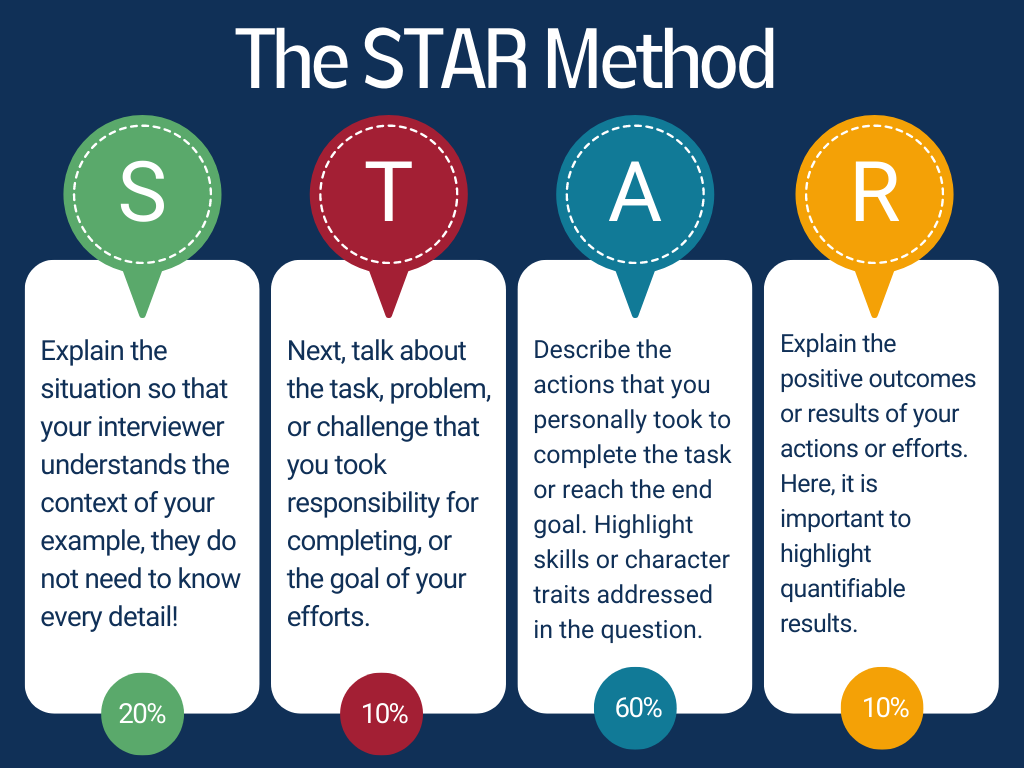
7. Describe a challenge or difficult situation you've faced and how you dealt with it.
These are not meant to trip you up. Interviewers just want to know how you react when things don’t go your way. They’re looking for resilience, honesty, and your ability to reflect. When asked about a challenge or failure, don’t try to sugarcoat it. Instead, walk them through the situation—what went wrong, how you handled it, and most importantly, what you learned from it. That learning is what matters most. It's not a red flag to have failed; it’s a red flag to not have grown from it. Approach this question by using the STAR-L approach where L stands for learning.
8. What’s the story or meaning behind your name?
9. What has been your biggest failure or a decision you regret?
10. Why do you want to pursue an MBA at this point in your life?
11. What are your short-term, mid-term, and long-term career goals?
12. Who is your role model, and what qualities do you admire in them?
13. Which MBA specialization are you most interested in, and why?
14. How will your academic background or work experience contribute to your MBA journey?
15. Can you share the details of a key project you’ve worked on?
16. Tell us about any leadership roles or responsibilities you've held.
17. If not an MBA, what would your alternative plan be?
18. Why do you want to work with this company and in this specific role?
19. Walk us through your resume.
20. What was your job role and what did you learn from it?
21. How would your manager, friends, or family describe you?
22. Have you ever faced an ethical dilemma? How did you handle it?
23. How do you manage stress or pressure? Can you share a real-life example?
24. What is one value you hold close in life, and why is it important to you?
Then there are the curveball questions—those situation-based, ethical, or logic-heavy ones. These are meant to test your presence of mind and decision-making. For example:
“What would you do if your manager asked you to do something unethical?”
“How would you resolve a conflict in your team?”
“If you had to fire a close friend from your project, how would you handle it?”
There’s no textbook answer to these, and that’s the point. Your reasoning, clarity of thought, and ability to stay composed under pressure is what interviewers care about.
Interviews are less about being perfect and more about being authentic. They’re your chance to tell your story—what drives you, what you’ve learned, where you want to go, and who you are beyond the bullet points on a resume. Preparing for interviews is a process of introspection as much as it is about practice. So reflect on your journey, anticipate the questions, and rehearse just enough to sound confident, not robotic.
And remember, whether it’s a B-school panel or a summer internship recruiter—you don’t need to have all the answers. You just need to show that you’re thoughtful, self-aware, and ready to learn.
Read More:
- Online vs Offline Coaching: Pros and Cons
- DILR Strategies to Score a 99 Percentile
- Free Formula Book for Quants
- From a Failed UPSC Attempt to IIM-C
- From Journalism to IIM-K
- VARC Guide For Engineers
- Staying consistent with the 6-month-long CAT journey
- Alternative Options to the CAT Exam
- Avoiding Exam Burnout
- Is this the right Time for an MBA
- Quitting a Job for CAT: Is it the right thing?
- Train your mind for the 2-hour Exam